Resources
Study the patterns behind strong product design interviews.
A curated library of mock interviews, public rubrics, scorecards, and AI product design breakdowns, selected to help you understand how strong candidates structure their answers, recover from ambiguity, and explain tradeoffs.
Best used when you want to:
- Learn the pacing of a live whiteboarding round
- See how strong candidates think out loud
- Turn one resource into one focused practice rep
Interview prep guides
Practical, no-fluff guides we wrote — frameworks, realistic practice prompts, and AI-native interview prep. Read one, then practice it live.
Product Design Whiteboarding Challenge: What Interviewers Are Really Looking For
A 10-step structure for the timed round — clarify, frame, prioritize, sketch, close — with strong-answer examples and the mistakes that quietly cost candidates.
30 Product Design Whiteboarding Prompts to Practice Before Your Interview
Thirty realistic prompts across consumer, marketplace, B2B, and AI products — plus a repeatable way to work each one and a full worked walkthrough.
AI Product Design Interview Practice: How to Answer Modern AI Design Prompts
What changes when the prompt involves AI — interaction models beyond chat, separating observation from inference, the trust layer, and measuring AI quality.
Mock interviews
How To ACE AI Product Design Interviews
Aakash Gupta
Full AI product design mock interview. Useful for showing what strong structure, user segmentation, concept breadth, prioritization, AI risks, and closing story sound like.
Product Design Whiteboarding Mock Interview
YouTube
Useful example of a live product design whiteboarding mock. Good for users who want to see pacing, narration, and sketching in action.
UX Mock Whiteboard Challenge with Meta Designer (Part 1)
YouTube
Useful for seeing how a real whiteboard challenge is facilitated and how candidates think aloud.
UX Mock Whiteboard Challenge with Meta Designer (Part 2)
YouTube
Continuation of the Meta designer whiteboarding mock, useful for studying feedback and wrap-up.
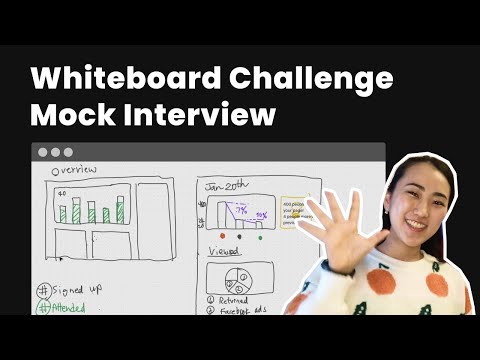
Whiteboard Challenge UX Mock Interview
YouTube
Another practical mock interview example for users who want more reps and examples.
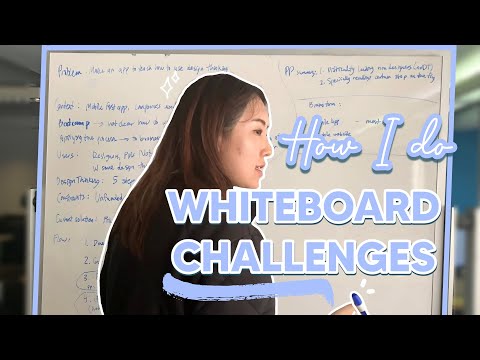
Whiteboard Challenge Live Demo
YouTube
Live demo with feedback at the end. Useful for showing users how interviewer feedback sounds.
Articles & guides
The AI Product Design Interview: Your Complete Guide
Aakash Gupta / Product Growth
Best resource for AI-native product design prompts. Useful for adding AI fluency, trust, risks, and prioritization to our rubric.
The FAANG UX Design Interview Process
Design Buddies
Good broad overview of FAANG-style UX interviews. Mentions live design challenges / whiteboarding and the need to clarify constraints, user goals, and success metrics.
How to Prepare for the Whiteboard Challenge
Coursera
Useful beginner-friendly explanation of what whiteboarding tests: design thinking, collaboration, time pressure, practice, and recording yourself for feedback.
5 Steps to Master a Whiteboard Design Challenge
UX Design / Zhenshuo Fang
Classic whiteboarding framework. Useful for the app's classic mode: clarify, define, ideate, prioritize, sketch, and explain.
How long are real product design interviews?
Curated from public web sources
Sourced lengths for Shopify (90 min design challenge), Meta (4-hour onsite), and Amazon (5×60-min 1:1s including a whiteboard round). Honest disclaimer where sources didn't commit.
Product Designer Interview Scorecard Template
Ten Per Zent
Useful reference for structured 1–5 scorecard thinking. Good inspiration for turning feedback into consistent evaluation categories.
AI Product Manager Interview Questions and Prep
IGotAnOffer
Good reference for AI product interview question types and AI-focused prep. Useful for extending the app beyond classic UX prompts.
What is a Product?
SVPG
Useful framing for product judgment: good products must solve for customer, business, and technology. Helpful for rubric language.
We don't claim a single canonical source for the rubric. These are the write-ups that most consistently match what real interviewers score on.